Rental property taxes are one of the recurring expenses landlords need to consider when evaluating a rental property. They can reduce Net Operating Income (NOI), affect cash flow, and vary widely depending on the property’s location, assessed value, local tax rules, exemptions, and other factors. Using realistic property tax estimates can help make rental property analysis more accurate.
In this guide, you’ll learn how property taxes generally work, how to estimate them, where they fit into rental property calculations, and how they can affect NOI and cash flow.
What Are Property Taxes on a Rental Property?
Property taxes are generally taxes imposed by local governments on real estate. The calculation method varies by location, but property taxes are commonly connected to a property’s taxable or assessed value and the applicable local tax rate.For a landlord, property tax is important because it is a recurring cost of owning the rental property. Even if the property’s rent stays the same, a change in its tax assessment or tax rate can change the property’s expenses and financial results.
How Are Rental Property Taxes Calculated?
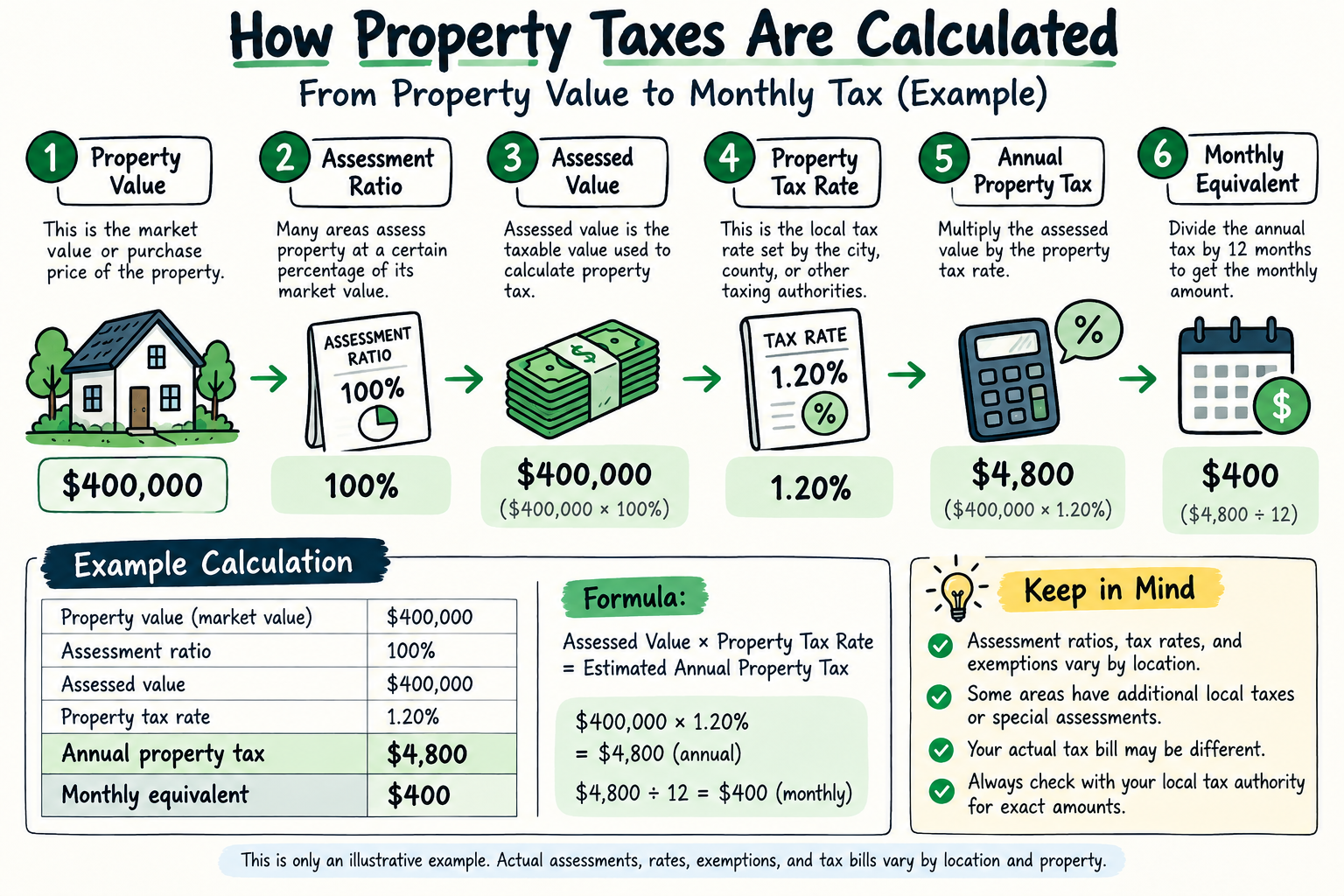
A simplified way to estimate property tax is:Assessed Value × Property Tax Rate = Estimated Annual Property TaxHowever, the actual calculation can be more complicated. A jurisdiction may use an assessment ratio, exemptions, special assessments, multiple taxing authorities, or other local rules. Always check the relevant local tax authority when you need an exact tax amount.
Example
Property value: $400,000
Assessment ratio: 100%
Assessed value: $400,000
Property tax rate: 1.20%$400,000 × 1.20% = $4,800Estimated annual property tax = $4,800Estimated monthly equivalent = $400This is only an illustrative example. Actual assessments, rates, exemptions, and tax bills vary by location and property.
Want to estimate the numbers for a property? Use our free Property Tax Calculator.
Why Property Taxes Matter for Rental Property Investors
Property taxes are more than a bill a landlord pays each year. They are part of the ongoing cost of owning and operating a rental property.For rental property analysis, property taxes can affect two important numbers: Net Operating Income (NOI) and cash flow.A property with strong rental income can still produce weaker results than expected if property taxes and other operating expenses are high. That is why investors should estimate property taxes before evaluating a potential rental property.
Are Property Taxes an Operating Expense?
For a basic rental property analysis, property taxes are generally treated as an operating expense when calculating Net Operating Income (NOI).A simplified NOI formula is:Effective Rental Income − Operating Expenses = NOIOperating expenses may include costs such as property taxes, insurance, maintenance, property management, and certain other recurring property expenses.Mortgage principal and interest are generally kept separate from NOI in standard real estate analysis.
You can estimate NOI using our free NOI Calculator.
For U.S. tax purposes, property owners can also review IRS guidance on real estate taxes and which taxes may be deductible.
How Property Taxes Affect NOI
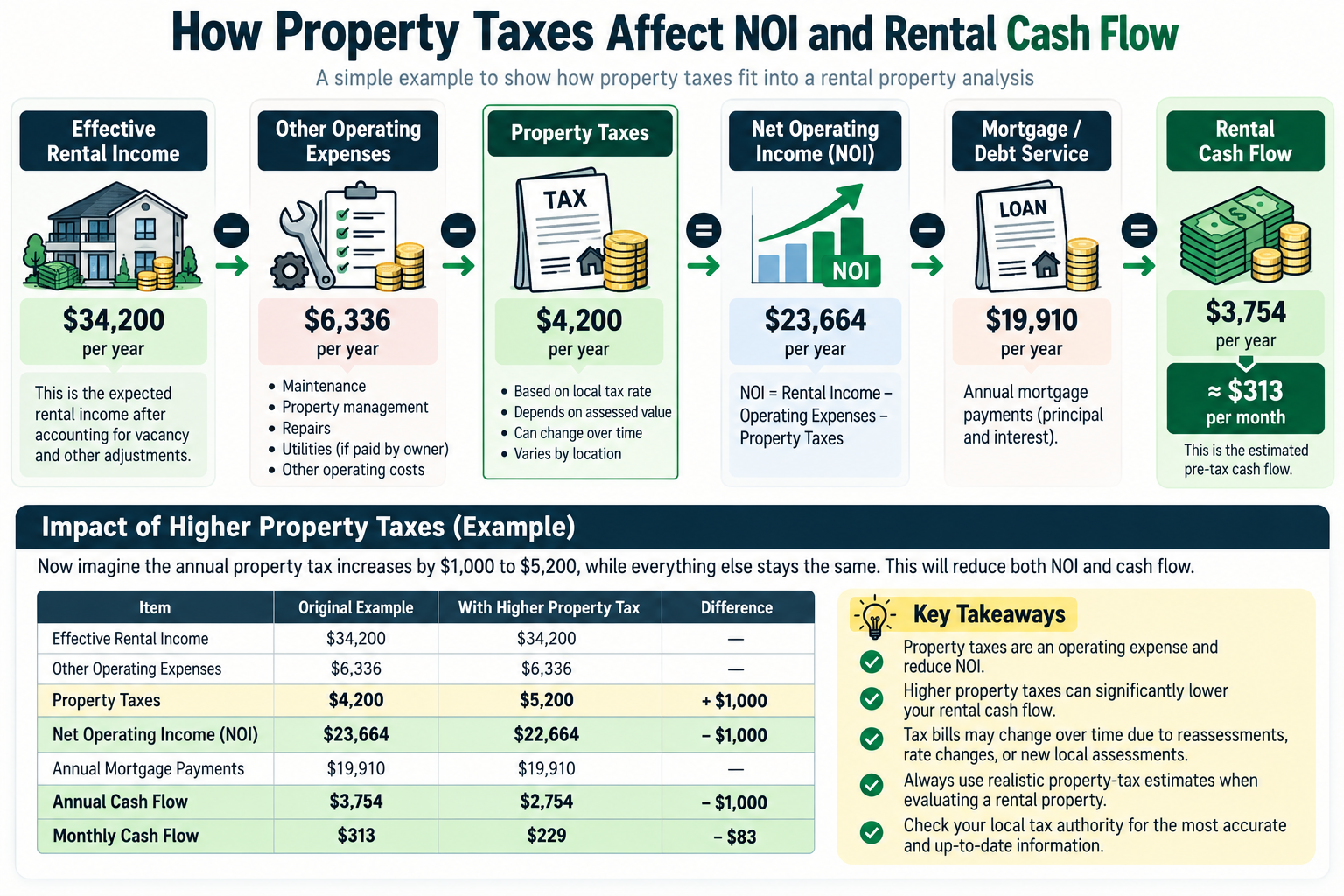
Suppose a rental property produces $34,200 in effective annual rental income.
Other operating expenses total $6,336 per year.Annual property taxes are $4,200.
The calculation would be:$34,200 − $6,336 − $4,200 = $23,664 NOIEstimated NOI = $23,664 per year
Now imagine the annual property tax increased to $5,200, while everything else stayed the same.
The estimated NOI would become:$34,200 − $6,336 − $5,200 = $22,664That is $1,000 less NOI in this simplified example.
How Property Taxes Affect Rental Cash Flow
NOI does not include the property’s financing costs in this simplified analysis. To estimate cash flow, an investor may then account for mortgage payments or other debt service.
For example:NOI: $23,664/year
Annual mortgage payments: $19,910/year$23,664 − $19,910 = $3,754
Estimated annual cash flow = $3,754Estimated monthly cash flow = approximately $313
If annual property taxes increased by $1,000 and everything else remained unchanged, this simplified example would reduce annual cash flow by approximately $1,000 as well.
This is why using an unrealistic property-tax estimate can make a rental property’s projected cash flow look better or worse than the eventual result.
Calculate your own numbers with our Rental Cash Flow Calculator.
Can Property Taxes Change Over Time?
Yes. A property’s tax bill may change over time. The reasons depend on the location and local tax system.Possible factors can include changes in assessed value, changes in tax rates, reassessments after a sale or improvement, changes to exemptions, and special assessments or other local charges.Because the rules vary significantly by location, landlords should check the appropriate local tax authority rather than assuming the current tax bill will remain unchanged indefinitely.
Property Tax Assessment vs Property Value
A property’s market value and its assessed value are not always the same number.Market value generally refers to what a property may sell for in the market. Assessed value is a value used by the relevant taxing authority when calculating property taxes.Depending on the location, the assessed value may equal the property’s market value, represent a percentage of it, or be determined under other local assessment rules.
Property Taxes and Mortgage Escrow
Some property owners pay property taxes directly to the local tax authority. Others may pay money toward property taxes as part of their monthly mortgage payment through an escrow account.With escrow, the mortgage servicer generally collects money during the year and uses those funds to pay eligible property-related bills when they become due.For rental property analysis, however, it is useful to identify property taxes separately so you can clearly understand the property’s operating expenses.
How to Find the Property Tax for a Rental Property
For a more accurate estimate, start with information from the appropriate local government or tax authority rather than relying only on a general percentage found online.Useful information may include:
• Current property tax bill
• Assessed or taxable value
• Applicable tax rates
• Assessment history
• Exemptions, if applicable
• Special assessments or other local charges
If you are evaluating a property before purchasing it, also check whether a sale could trigger a reassessment under local rules.
Common Property Tax Mistakes Rental Property Investors Should Avoid
Using the seller’s current tax bill without further research
The future tax amount may differ, particularly if local rules allow reassessment after a sale.
Using one tax rate for every property
Property-tax systems vary significantly between locations.
Confusing market value with assessed value
The tax authority may not calculate taxes directly from the property’s current market price.
Leaving property taxes out of NOI
Ignoring a major recurring operating expense can overstate estimated NOI.
Assuming taxes will never change
Assessments, rates, exemptions, and other local factors can change.
Property Taxes vs Income Taxes on Rental Property
Property taxes and income taxes are different.
Property tax is generally associated with ownership of the real estate and is usually imposed by a local taxing authority.
Income tax concerns taxable rental income and applicable deductions under federal, state, and other relevant tax rules.
For U.S. federal tax purposes, rental income and expenses have their own rules. Landlords should use current IRS guidance and, when appropriate, speak with a qualified tax professional about their individual situation.
Frequently Asked Questions
Are property taxes included in NOI?
For a standard rental property analysis, property taxes are generally treated as an operating expense when calculating NOI. Financing costs such as mortgage principal and interest are generally handled separately.
Are property taxes included in rental cash flow?
Yes, property taxes can affect rental cash flow because they are part of the property’s expenses. If property taxes rise while income and other costs remain unchanged, projected cash flow may decrease.
How do I estimate property taxes on a rental property?
A simple estimate can multiply the applicable assessed value by the property tax rate. However, actual calculations vary by jurisdiction and may involve assessment ratios, exemptions, special assessments, or other rules. Check the relevant local tax authority for accurate information.
Can property taxes increase after buying a rental property?
They can. Whether and how much they change depends on local assessment and tax rules. A sale, reassessment, property improvement, tax-rate change, or exemption change may affect the bill in some jurisdictions.
Do landlords pay property taxes if they have a mortgage?
Owning a property with a mortgage does not by itself eliminate property-tax obligations. Depending on the loan arrangement, taxes may be paid directly by the owner or collected through an escrow account.
Calculate Your Rental Property Numbers
Property taxes are an important part of evaluating a rental property’s expenses. Using realistic tax estimates can help you calculate NOI and cash flow more accurately and better understand the property’s financial picture.
Use Realtolic’s Property Tax Calculator, NOI Calculator, and Rental Cash Flow Calculator to explore your own numbers.
Disclaimer: This article is for general educational purposes and is not tax, legal, investment, or financial advice. Property-tax rules vary by jurisdiction. Verify current information with the appropriate tax authority or a qualified professional.