Buying a home is one of the biggest financial decisions many people make. A mortgage can make homeownership possible without paying the full price of a home upfront. But mortgage payments include more than just the loan itself. Interest, property taxes, homeowners insurance, and other costs can affect how much you pay each month.
This simple guide explains how mortgages work, what affects your monthly payment, and the important costs to understand before buying a home.
What Is a Mortgage?
A mortgage is a loan used to buy a home or other real estate. Instead of paying the full purchase price at once, you borrow money from a lender and repay it over time. Most mortgage payments are made monthly, and the loan may last 15, 20, or 30 years.Your mortgage payment can include more than the amount you borrowed. Depending on the loan and property, your monthly housing cost may include principal, interest, property taxes, homeowners insurance, mortgage insurance, and HOA fees.
How Does a Mortgage Work?
When you buy a home with a mortgage, you usually pay part of the price yourself as a down payment. The lender provides the remaining amount as a home loan. You then repay that loan through monthly payments over the agreed loan term. Part of each principal-and-interest payment reduces your loan balance, while another part pays interest to the lender. As you repay principal, you build equity in the home. Your equity can also change as the property’s value changes.

What Makes Up a Monthly Mortgage Payment?
Your monthly mortgage payment can include several different costs. The exact amount depends on your loan, home, location, and insurance. Understanding each part makes it easier to estimate the true monthly cost of owning a home.
Principal
Principal is the amount of money you borrowed to buy the home. Each time part of your payment goes toward principal, your remaining loan balance becomes smaller.
Interest
Interest is the cost of borrowing money from the lender. Your interest rate has a major effect on your monthly principal-and-interest payment and the total interest you may pay over the life of the loan.
Property Taxes
Property taxes are generally charged by local governments and are based on rules and property values in your area. Many homeowners pay them through an escrow account as part of their monthly housing payment.
Homeowners Insurance
Homeowners insurance helps protect your home and belongings against certain covered losses. If you have a mortgage, your lender will generally require homeowners insurance.
Mortgage Insurance (PMI)
With some conventional mortgages, private mortgage insurance (PMI) may be required when your down payment is less than 20%. PMI protects the lender, not the homeowner, if the borrower stops making payments.
HOA Fees
If your home belongs to a homeowners association (HOA), you may also pay HOA fees. These fees are separate from the mortgage itself and can cover services or shared community expenses.
Mortgage Payment Example
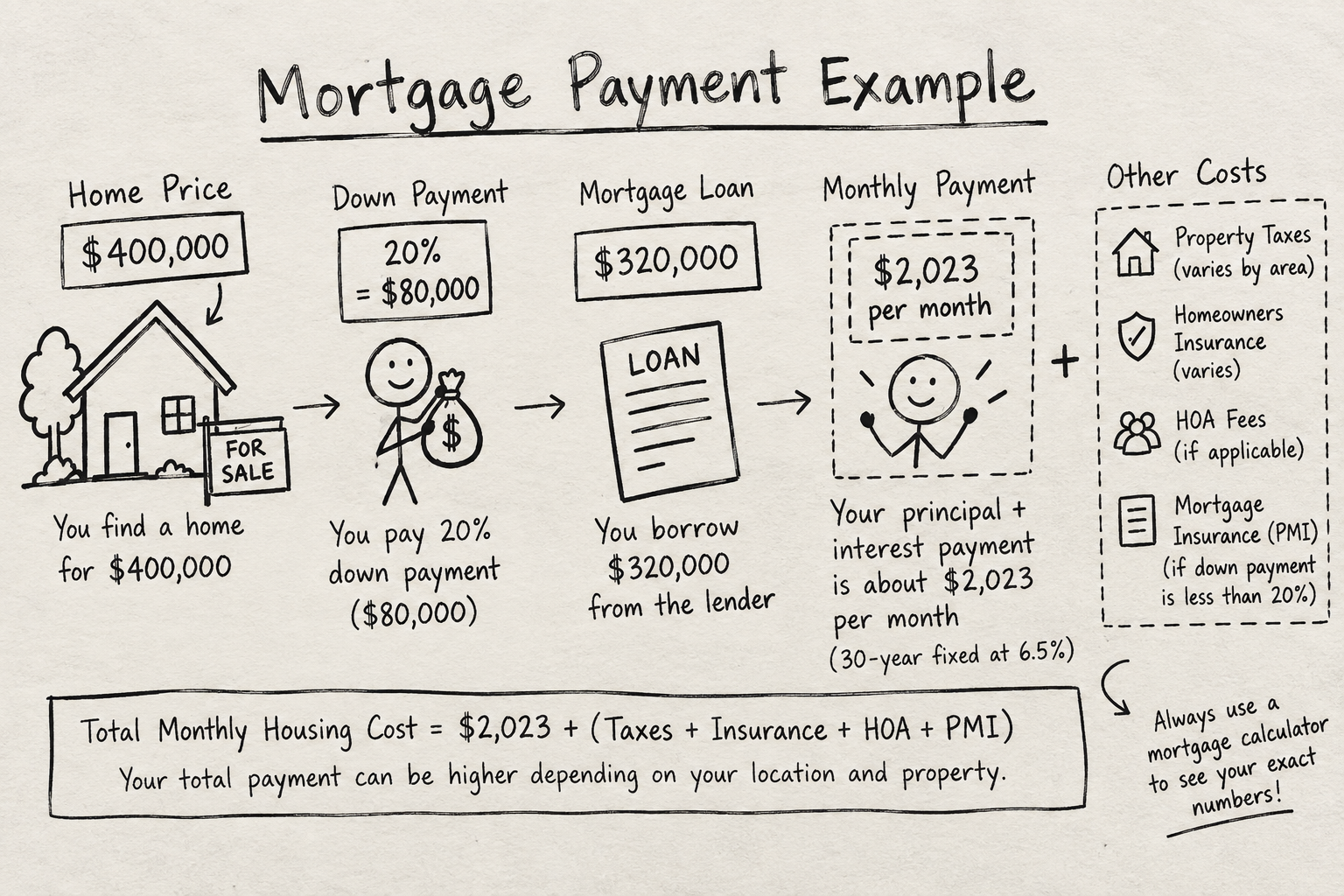
Imagine you buy a $400,000 home and make a 20% down payment ($80,000). Your mortgage loan would be $320,000. If you choose a 30-year fixed-rate mortgage at 6.5%, the principal-and-interest payment would be about $2,023 per month. Property taxes, homeowners insurance, HOA fees, and any applicable mortgage insurance would be added separately, so your total monthly housing cost could be higher.
How Much Down Payment Do You Need?
A down payment is the money you pay upfront when buying a home. The amount you need depends on the mortgage program, lender requirements, and your financial situation. A larger down payment reduces the amount you need to borrow and can lower your monthly mortgage payment.You do not always need a 20% down payment to buy a home. Some loan programs allow lower down payments. However, with some conventional loans, putting down less than 20% may mean paying private mortgage insurance (PMI).
How Mortgage Interest Rates Affect Your Payment
Your mortgage interest rate affects both your monthly payment and the total interest you pay over time. A higher rate generally means a higher monthly principal-and-interest payment. A lower rate generally means a lower payment when the loan amount and term stay the same.
15-Year vs. 30-Year Mortgage
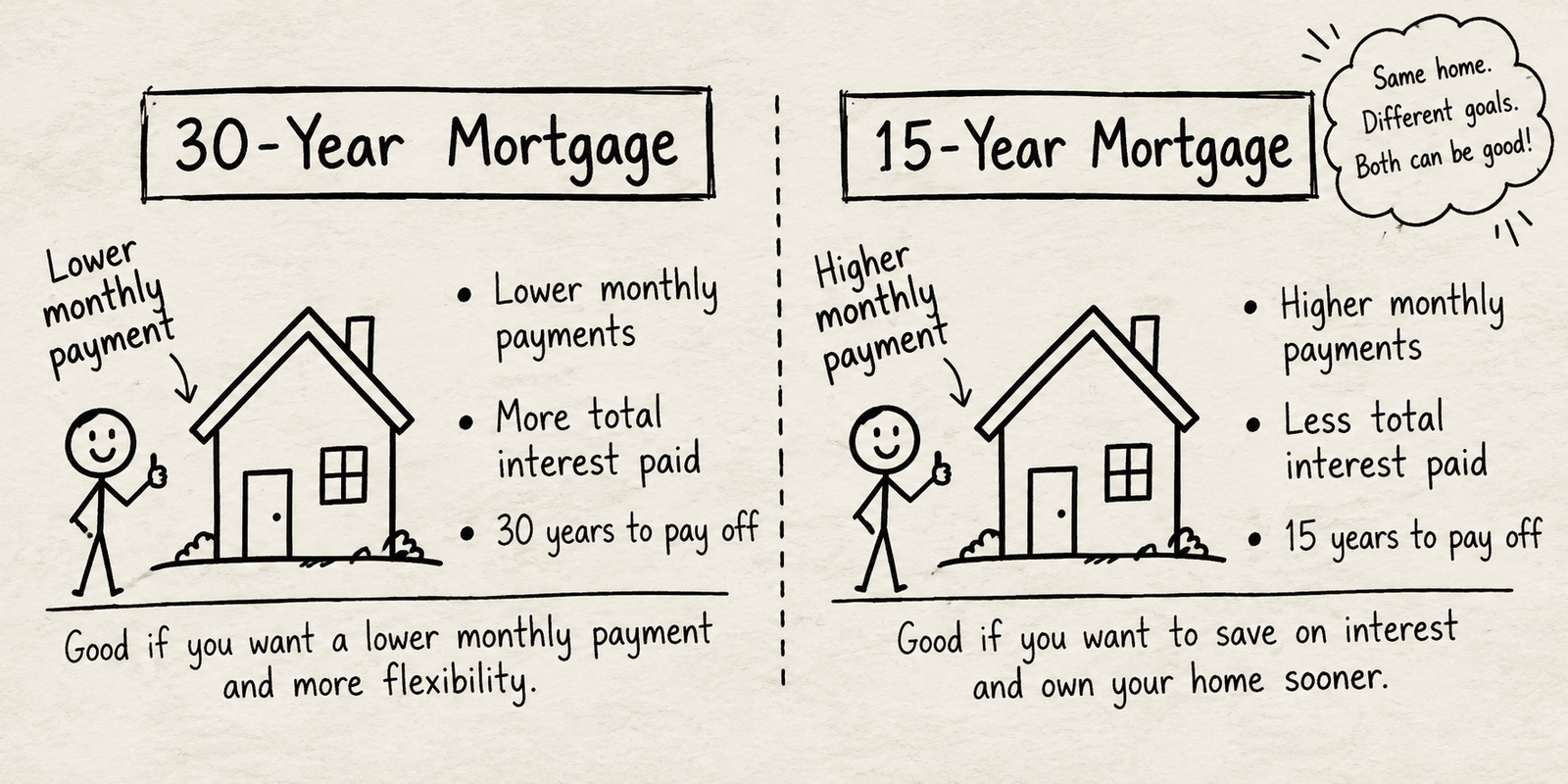
A 30-year mortgage spreads repayment over a longer period, so the monthly principal-and-interest payment is usually lower than with a 15-year mortgage for the same loan amount and rate. A 15-year mortgage has higher monthly payments but repays the loan faster and generally results in less total interest paid.Neither loan term is automatically right for everyone. The better fit depends on your budget, interest rate, financial goals, and how much monthly payment you can comfortably handle.
Estimate Your Monthly Mortgage Payment
Your mortgage payment depends on your home price, down payment, interest rate, loan term, property taxes, homeowners insurance, and possible HOA fees. Testing different numbers before buying can help you understand what a home may cost each month.
Frequently Asked Questions
How is a mortgage payment calculated?
The principal-and-interest portion is based on the loan amount, interest rate, and loan term. Your total monthly housing payment may also include property taxes, homeowners insurance, mortgage insurance, and HOA fees.
Do I need 20% down to buy a home?
No. Some mortgage programs allow a down payment below 20%. The amount required depends on the loan program and lender. With some conventional loans, private mortgage insurance may apply when the down payment is below 20%.
What happens if mortgage rates go up?
For a new fixed-rate mortgage, a higher interest rate generally increases the monthly principal-and-interest payment for the same loan amount and term. That is why comparing different interest rates can be useful when planning a home purchase.
What is included in a monthly mortgage payment?
A monthly housing payment may include mortgage principal, interest, property taxes, homeowners insurance, mortgage insurance, and HOA fees. The exact costs depend on your loan and property.
What is principal on a mortgage?
Principal is the amount of money you borrowed that you still need to repay. When part of your monthly payment goes toward principal, your remaining loan balance decreases.
What is mortgage interest?
Mortgage interest is the cost of borrowing money from a lender. The interest rate helps determine your monthly principal-and-interest payment and how much interest you may pay over the loan term.
Does a larger down payment lower your mortgage payment?
Generally, yes. A larger down payment means you borrow less money. With the same interest rate and loan term, a smaller loan amount generally results in a lower monthly principal-and-interest payment.
Are property taxes included in a mortgage payment?
They can be. If your lender uses an escrow account, part of your monthly payment may be collected for property taxes. Otherwise, you may pay property taxes separately.
Related Real Estate Calculators
Mortgage Payment Calculator
Estimate your monthly mortgage payment using your home price, down payment, interest rate, loan term, property taxes, homeowners insurance, and HOA fees.
Closing Cost Calculator
Estimate common buyer closing costs, loan fees, prepaid expenses, and the cash you may need when purchasing a home.
Rent vs Buy Calculator
Compare the estimated long-term financial costs of renting a home versus buying one based on your own numbers.
Important Note
The examples and calculator results on Realtolic are estimates for educational purposes only. Actual mortgage payments, rates, taxes, insurance, fees, and loan requirements can vary. Consider checking your specific numbers with a qualified lender or financial professional before making a financial decision.