
Rental property insurance cost is an important expense for landlords and rental property investors. The actual premium can vary based on the property, location, coverage, insurer, deductible, claims history, and other risk factors. Insurance is generally considered an operating expense when calculating rental property NOI.
There is no single insurance cost that applies to every rental property. Premiums can vary based on the property, location, coverage, insurer, deductible, claims history, and other risk factors.
What Is Rental Property Insurance?
Rental property insurance is insurance designed for properties that are rented to tenants rather than occupied as the owner’s primary residence. The exact protections and exclusions depend on the individual policy.
What Can Rental Property Insurance Cover?
Property Damage
Depending on the policy and cause of loss, coverage may help protect the insured building against certain types of covered damage. Policies, limits, deductibles, and exclusions vary.
Liability Protection
Some landlord insurance policies include liability coverage for certain covered claims connected with the rental property. The amount and scope of coverage depend on the policy.
Loss of Rental Income
Some policies may provide coverage for lost rental income when a property becomes uninhabitable because of a covered loss. Conditions, limits, and exclusions can apply.
Insurance coverage, exclusions, and policy terms can vary, so property owners should review their policy carefully and compare coverage as well as price.
Is Rental Property Insurance an Operating Expense?
Insurance premiums are generally included as an operating expense when estimating NOI for a rental property. This means insurance costs can affect NOI, cap rate, and cash flow calculations.
What Can Affect Rental Property Insurance Costs?
Rental property insurance premiums can vary considerably. The price depends on the property, policy, insurer, coverage selected, and other risk factors.
Property Location
Location can affect insurance pricing because risks such as weather, natural hazards, local rebuilding costs, and other regional factors can differ.
Property Age and Condition
The age and condition of the building, roof, electrical system, plumbing, heating system, and other property components may affect insurance pricing or coverage.
Coverage and Deductible
Coverage limits, optional protections, and the deductible selected can affect the premium. A lower premium does not necessarily mean the same level of coverage.
Landlord Insurance vs Homeowners Insurance
Homeowners insurance is generally designed for an owner-occupied home, while landlord or rental property insurance is designed for a property rented to tenants. Coverage varies by insurer and policy, so property owners should review the actual policy terms.
Rental Property Insurance Cost Example
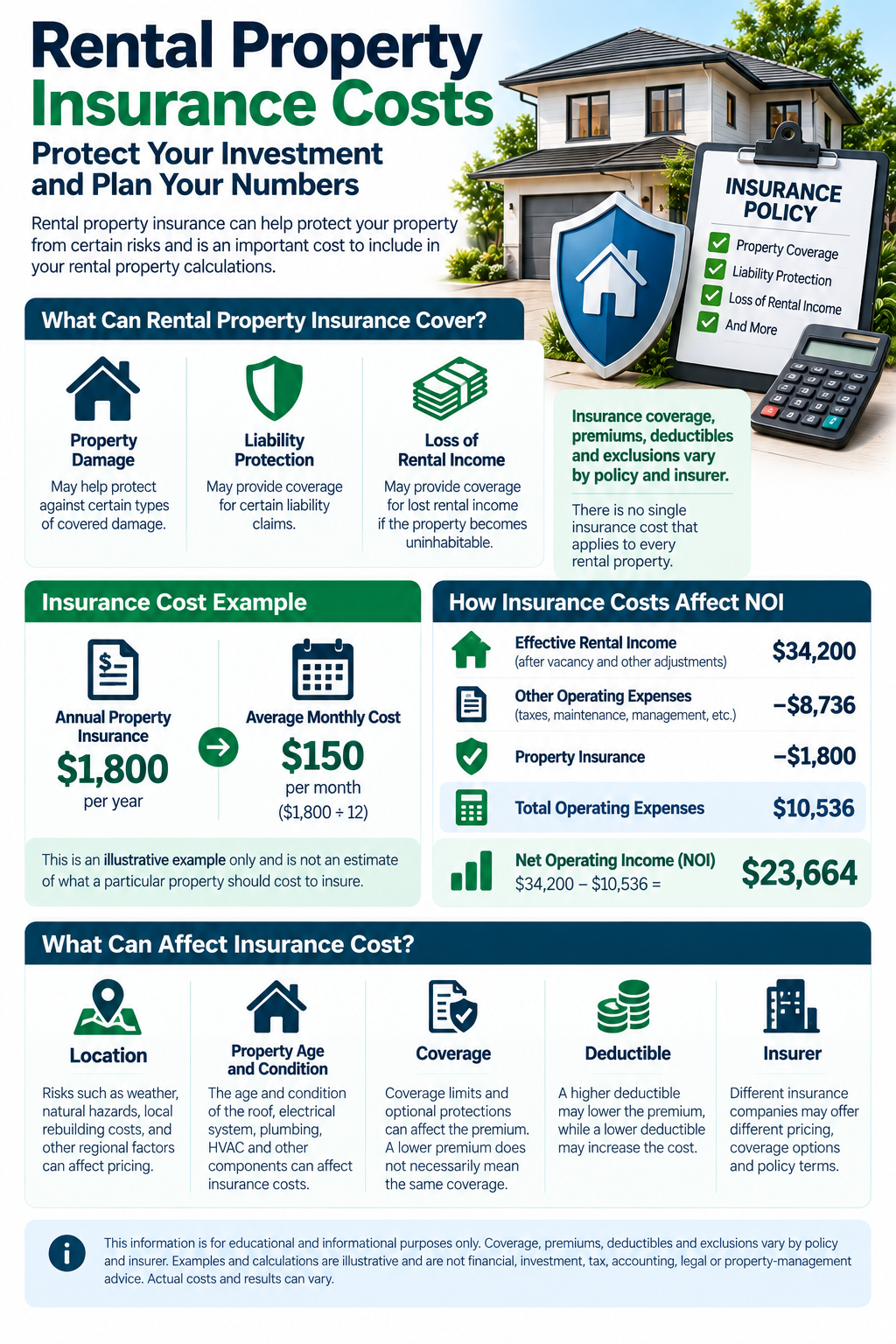
Suppose a rental property has an annual insurance premium of $1,800. This is only an illustrative example and is not an estimate of what a particular property should cost to insure.
Annual Insurance = $1,800 and Average Monthly Cost = $1,800 ÷ 12 = $150
How Insurance Costs Affect NOI
Effective Rental Income: $34,200 → Other Operating Expenses: $8,736 → Property Insurance: $1,800 → Total Operating Expenses: $10,536 → NOI: $23,664
NOI = $34,200 − $10,536 = $23,664
How Insurance Costs Affect Cash Flow
Because property insurance is generally treated as an operating expense, higher insurance costs can reduce NOI and may also reduce estimated rental property cash flow when other assumptions remain unchanged.
nsurance should be analyzed together with property taxes, maintenance, management fees, vacancy, utilities, financing costs, and other relevant expenses rather than considered by itself.
How to Estimate Rental Property Insurance Costs
The most reliable way to estimate insurance for a specific rental property is to obtain quotes based on that property and the coverage you need. General estimates may not reflect the actual premium.
Compare Coverage, Not Just Price
When comparing insurance options, consider coverage limits, deductibles, exclusions, optional protections, and policy conditions in addition to the premium.
Use the Actual Premium in Property Analysis
If you already have an insurance quote for the property, using that amount can provide a more property-specific estimate when calculating NOI and cash flow.
Insurance Cost vs Insurance Coverage
A lower insurance premium does not automatically mean one policy is more suitable than another. Policies can provide different coverage limits, deductibles, exclusions, and protections.
Why Insurance Costs Can Change
Insurance premiums can change over time because of changes in the property, coverage, insurer pricing, claims experience, rebuilding costs, local risks, and other underwriting factors.
Calculate Your Rental Property Numbers
Use Realtolic’s calculators to see how insurance and other operating expenses can affect your rental property estimates.
NOI Calculator
Rental Cah Flow Calculator
Cap Rate Calculator
Rental Property ROI Calculator
Rental Property Operating Expenses
Frequently Asked Questions
What is rental property insurance?
Rental property insurance is insurance designed for a property that is rented to tenants. Coverage can vary by policy and insurer, so landlords should review the specific policy terms, limits, deductibles, and exclusions.
Is rental property insurance an operating expense?
Insurance premiums are generally treated as an operating expense when calculating Net Operating Income (NOI) for a rental property.
How much does rental property insurance cost?
There is no single cost that applies to every rental property. Premiums can vary based on location, property characteristics, coverage limits, deductible, insurer, claims history, and other underwriting factors.
Is landlord insurance the same as homeowners insurance?
Not necessarily. Homeowners insurance is generally designed for owner-occupied homes, while landlord or rental property insurance is designed for properties rented to tenants. Actual coverage depends on the policy.
Can rental property insurance cover lost rental income?
Some policies may provide loss-of-rental-income coverage when a property cannot be rented because of a covered loss. Conditions, coverage limits, waiting periods, and exclusions may apply.
Does rental property insurance affect NOI?
Yes. Because insurance premiums are generally included in operating expenses, higher insurance costs can reduce NOI when income and other expenses remain unchanged.
Does rental property insurance affect cash flow?
Yes. Changes in insurance costs can affect NOI and may therefore affect estimated rental property cash flow when other assumptions remain unchanged.
Final Thoughts
Rental property insurance is an important expense to consider when analyzing a rental property. The actual premium and coverage can vary significantly, so property-specific insurance information is more useful than relying only on a general estimate.
When possible, review actual insurance quotes and compare coverage limits, deductibles, exclusions, and policy conditions. Include the expected insurance premium alongside taxes, maintenance, management fees, vacancy, financing, and other relevant property costs.
Disclaimer: This article and Realtolic calculators are for educational and informational purposes only. Examples and calculations are estimates and are not financial, investment, insurance, tax, accounting, legal, or property-management advice. Insurance coverage, premiums, deductibles, exclusions, and requirements vary by property, policy, insurer, and location.